Common Signs Of A Faulty EGR Valve
Purpose
This article discusses common signs and symptoms of a faulty or malfunctioning Exhaust-Gas Recirculation (EGR) valve.
Introduction
The ignition and combustion process within an engine’s combustion chambers requires a precise combination of fuel and air (typically consisting of oxygen and nitrogen) to provide the force necessary to move the engine’s pistons. An increase in engine temperature and the emission of NOx gases are byproducts of the ignition/combustion process.
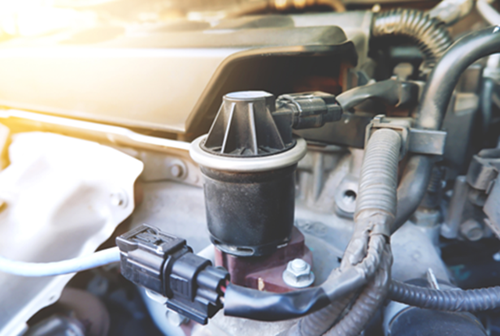
The EGR system aids in reducing NOx emissions at the tailpipe by recirculating a portion of the exhaust gas back into the combustion chambers to lower the temperature in the chambers. The principal component of this system is the EGR valve. The EGR valve operates under control of the Engine Control Module (ECM) to regulate the flow of exhaust gas to the combustion chambers by opening or closing, as needed, according to changes in operating conditions.
EGR valve malfunction is frequently caused by the accumulation of carbon deposits causing the valve to stick in the open or closed position. In severe cases, the valve and its associated passages can become fully obstructed, preventing the recirculation of exhaust gases back to the combustion chambers.
The following list describes the top six symptoms that may indicate a faulty or malfunctioning EGR valve.
1. Rough Engine IdleAn EGR valve stuck in the open position allows an excessive amount of exhaust gas to flow back into the combustion chamber. This results in an improper air-fuel mixture due to exhaust gas displacing atmospheric air in the combustion chamber, reducing oxygen content in the air-fuel mixture. This condition causes the engine to idle roughly.
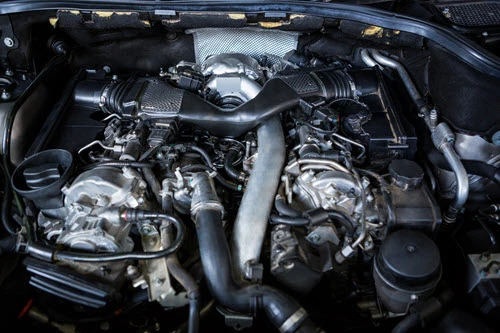
An EGR valve stuck either the open or closed position can cause a loss in performance during acceleration. resulting in decreased fuel economy, and sputtering or hesitation due to incorrect air-fuel ratio.

Even under normal operating conditions, NOx emissions exiting the tailpipe have a strong, noxious odor, which is both unpleasant and unhealthy. A malfunctioning EGR valve can cause the engine to consume more fuel. This results in an increase in NOx and unburned hydrocarbon fuel emissions passing through the engine and out the exhaust pipe. These emissions can be detected at the back of the vehicle, and even in the cabin.
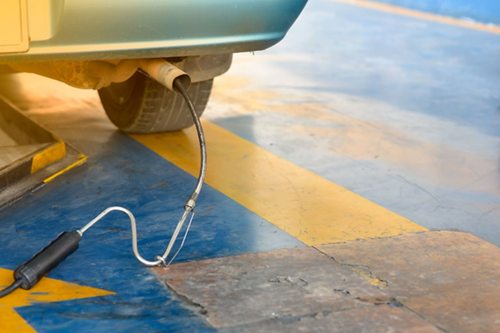
While there are several factors that can contribute to a vehicle failing an emissions test (including malfunctioning fuel injectors or oxygen sensor, a loose gas cap, or a dirty air filter), a faulty or defective EGR valve is another potential cause that should be considered. The primary function of the EGR valve is to reduce vehicle emissions. Any malfunction in the EGR valve can cause an increase in vehicle, making it more likely for the vehicle to fail an emissions test.
An EGR valve stuck in the closed position can cause an increase in temperature within the combustion chambers, potentially exceeding the threshold limit. Under these conditions, preignition of the air-fuel mixture may occur upon encountering high-temperature spots within the combustion chambers prior to the spark plug firing. This can result in a knocking sound in the engine when operating at low RPM. A continuously closed EGR valve will also result in an increase in vehicle emissions.
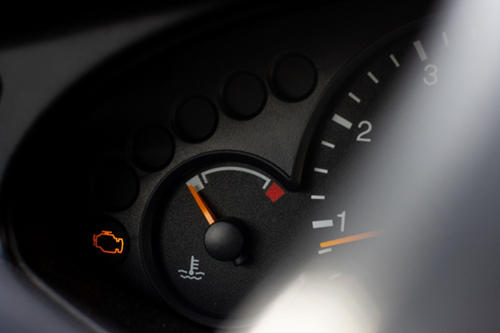
The Engine Control Module (ECM) controls the operation of the EGR valve, as well as the illumination of the Check Engine Light. In cases where a vehicle displays one or more symptoms such as those described above and the Check Engine light illuminates, it may indicate a faulty EGR valve. If the ECM detects that the air/fuel mixture is incorrect, or that the EGR valve does not move properly to its commanded position, it will set a Diagnostic Trouble Code (DTC). DTCs associated with a faulty EGR valve include P0300, P0100, P0101, P0102, or P0104.