Test And Replace The Catalytic Converter To Fix DTC P0430
on 2014 GMC Truck Sierra 1500
Introduction
The Catalytic Converter is an essential part of a vehicle's exhaust system. It converts harmful gases into less dangerous ones, reducing pollution. The 2014 GMC Truck Sierra 1500 V8, 5.3L models use V engines, so there are usually two Catalytic Converters. When the Catalytic Converter on bank 2 fails, it can lead to significant issues, including poor engine performance, lower fuel efficiency, and increased emissions, often causing Diagnostic Trouble Code (DTC) P0430 to set. This guide will help you diagnose and replace the Catalytic Converter to fix this issue in the 2014 GMC Truck Sierra 1500 V8, 5.3L models.
What is DTC P0430?
P0430 – Catalyst System Efficiency Below Threshold (Bank 2)
The main function of a Catalytic Converter is to reduce hydrocarbons, CO, and NOx in the exhaust gas. The Engine Control Module (ECM) monitors this by comparing signals from the oxygen sensors before and after the Catalytic Converter., If the Catalytic Converter is functioning properly, the Heated Oxygen Sensor (HO2S) Bank 2 Sensor 2 (B2S2) signal is lower than B2S1. If the signals are similar, the ECM illuminates the Malfunction Indicator Light (MIL) and sets DTC P0430, indicating the Catalytic Converter needs checking or replacing.
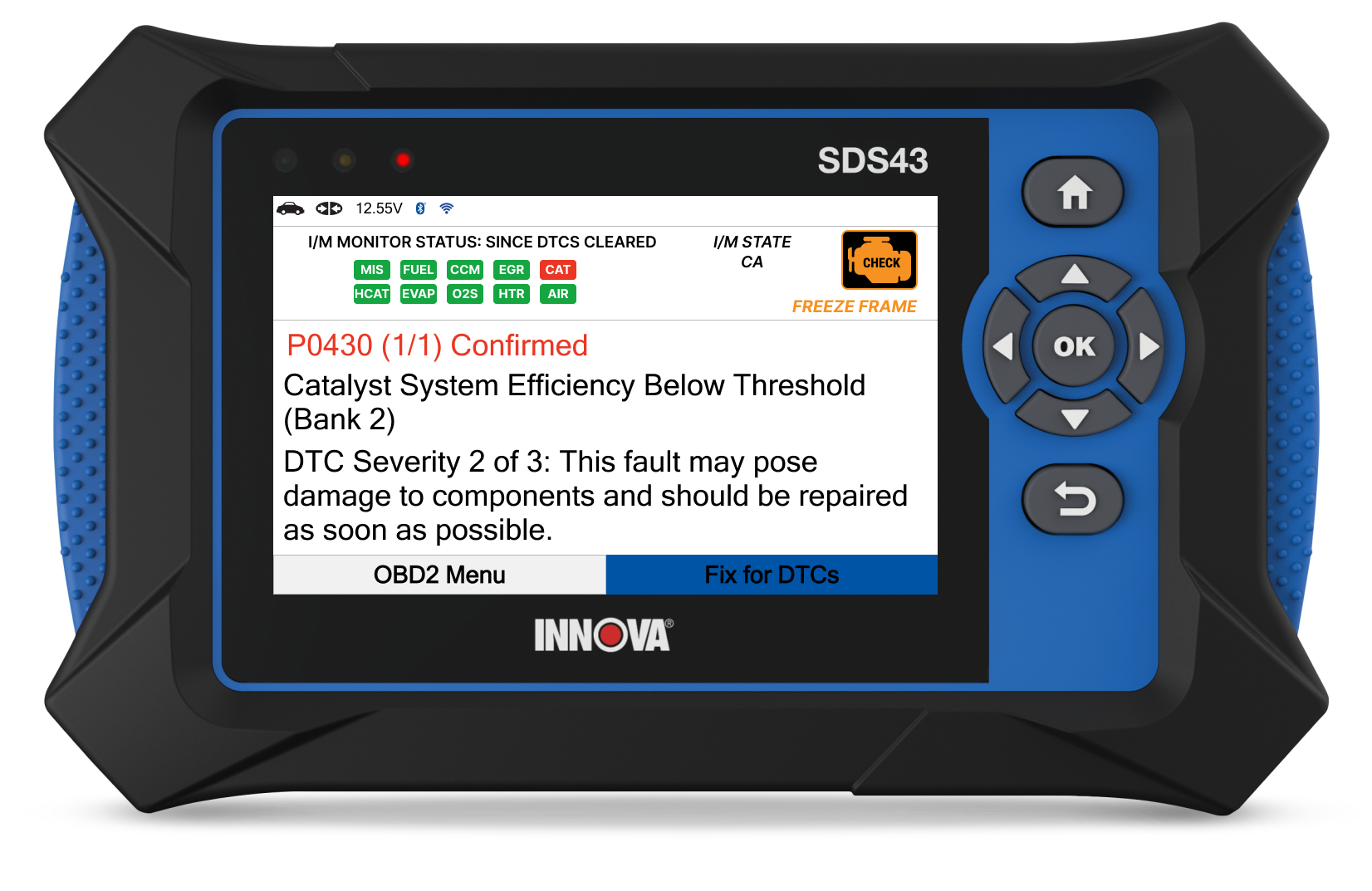
When a vehicle triggers the P0430, possible symptoms include failing emissions tests, increased emissions, rough idling, engine misfires, poor acceleration, and a sulfur odor.
This DTC can be caused by several issues, including problems with the oxygen sensor, exhaust or vacuum leaks, and faulty fuel injectors, with a malfunctioning Catalytic Converter often being the primary cause on the 2014 GMC Truck Sierra 1500 V8, 5.3L models.
Initial Inspection
Before diagnosing the catalytic converter, check for exhaust leaks or damaged components in the exhaust system. Inspect the oxygen sensors and wiring for damage. Also, ensure the exhaust manifold is intact and the exhaust system is free of obstructions. Refer to the Service Manual or relevant Technical Service Bulletin (TSB) for further guidance.
Diagnostic Procedures
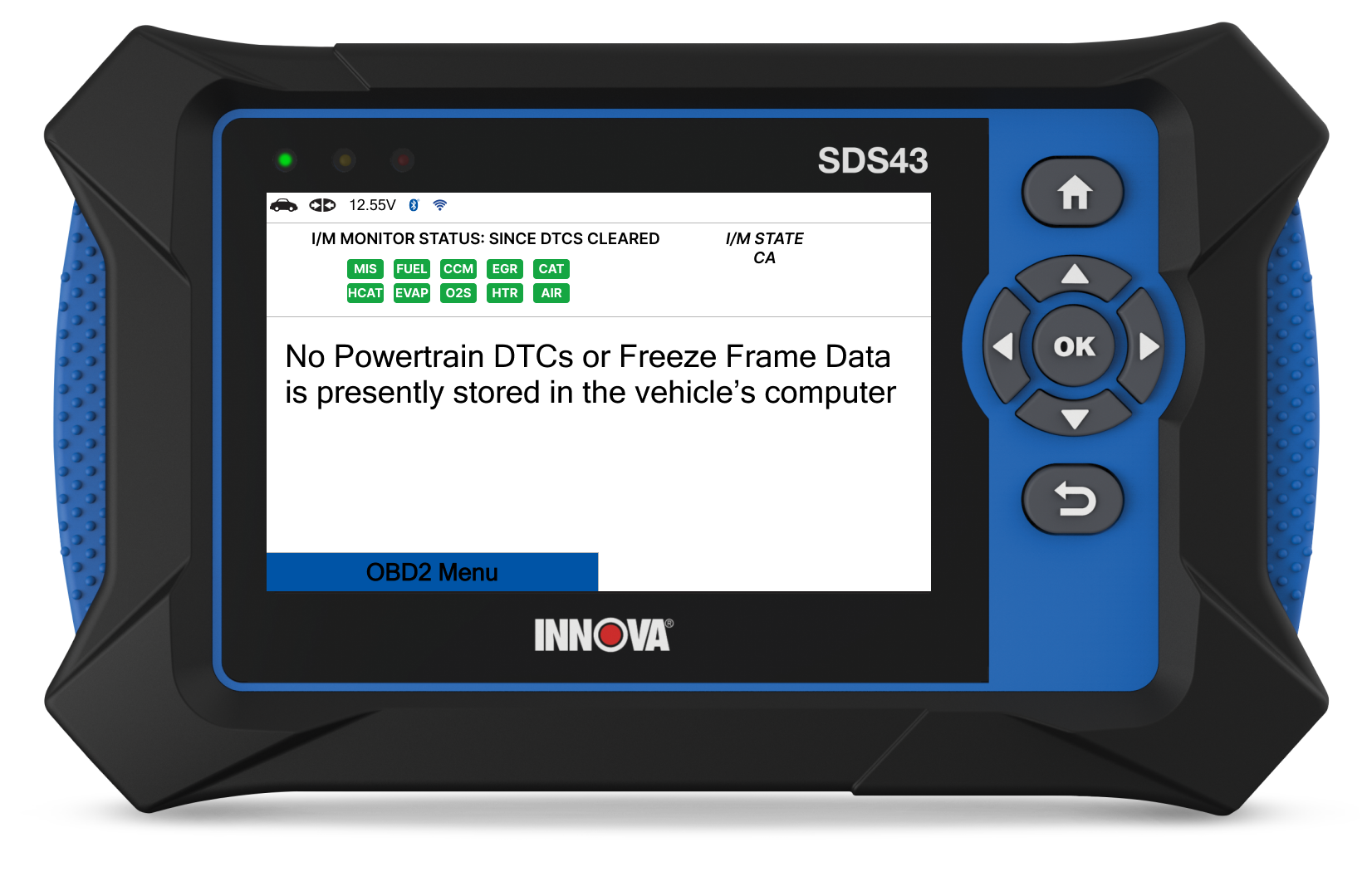
NOTE: Before diagnosing DTC P0430, use an Innova Scan Tool to check for all DTC(s). If DTC(s) other than P0430 are present, troubleshoot these DTC(s) first, then perform the following procedure.
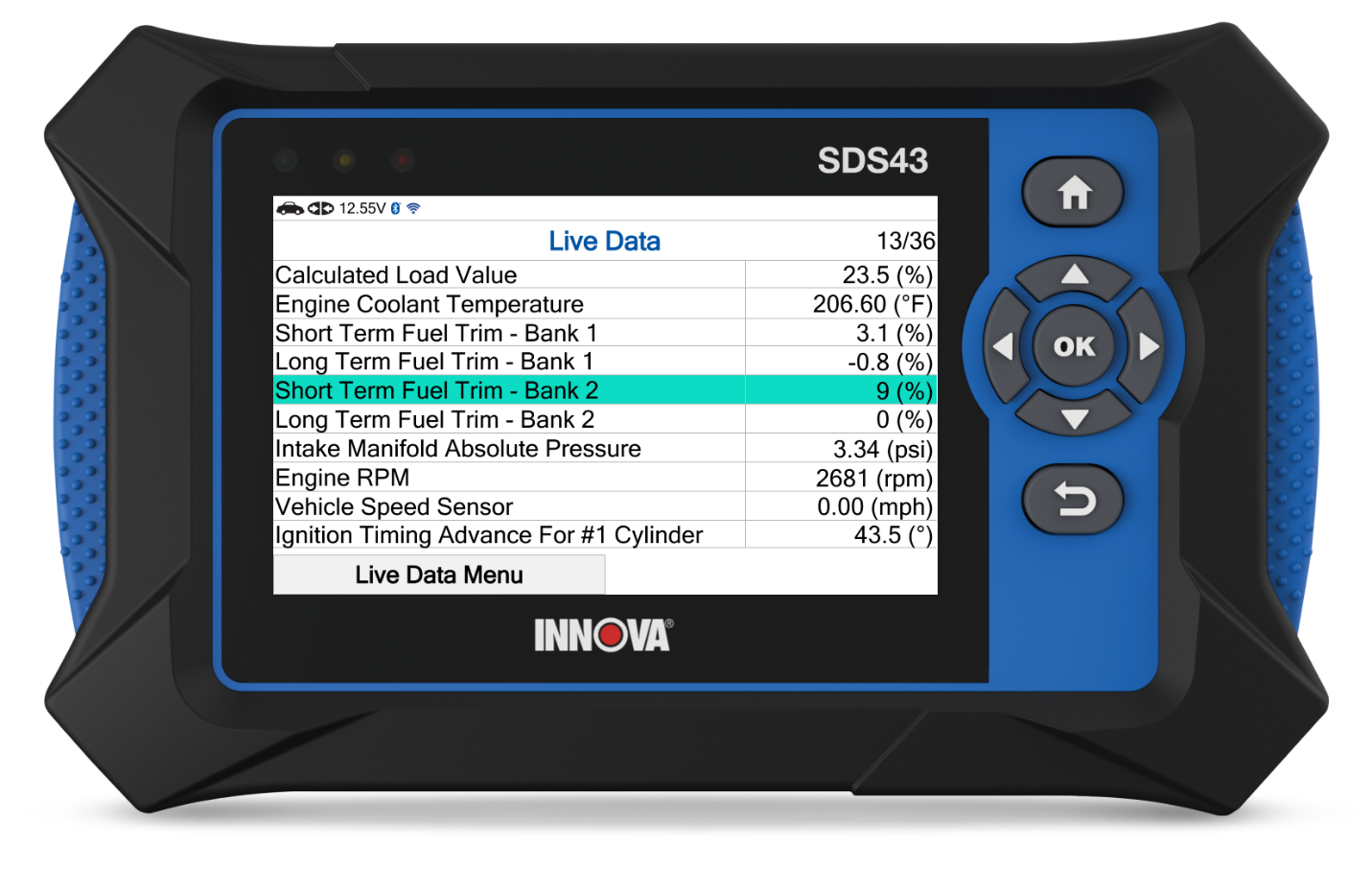
Step 1: Start the engine and let it idle. Use an Innova Scan Tool to access Live Data (LD) and monitor the Engine Coolant Temperature (ECT) reading. Ensure the displayed value is within the range of 185-221°F (85-105°C).
Step 2: While still using LD, check the Long-Term Fuel Trim (LTFT) at idle, 1500, 2000, and 2500 RPM. Ensure all LTFT values are within +/- 10%.
- If the LTFT value is not within +/- 10%, correct this issue before proceeding. Check for problems such as fuel pressure, leaking injectors, vacuum leaks, or Mass Air Flow (MAF) sensor faults.
- If the value is within specification, proceed to Step 3.
Step 3: Raise engine speed to 2000 RPM for approximately 3 minutes. Make sure Closed Loop operation is achieved.
Step 4: When the environmental conditions and traffic regulations permit, drive the vehicle at 45-65 mph with light load. Using an Innova Scan Tool in LD graphing mode, monitor the Heated Oxygen Sensor (HO2S) bank 2 sensor 2 voltage. The voltage should stay relatively constant when compared to Bank 2 sensor 1 fluctuating between 0.1–0.8V.
- If the voltage fluctuates rapidly between 0.1–0.8V, a defective catalytic converter is suspected. Check for misfires, over-fueling, or physical damage before replacement.
- If the voltage doesn’t follow this pattern, replace the HO2S. Perform Repair Validation.
Replace The Catalytic Converter
Removal
Step 1: Remove the exhaust manifold nut.
Step 2: Remove the exhaust seal.
Step 3: Remove the exhaust muffler clamp nut.
Step 4: Remove the catalytic converter.
Installation
Installation is accomplished in the reverse order of removal. Use a new exhaust seal and a new exhaust muffler clamp.
- Torque tighten exhaust manifold: 50 Nm (37 lb-ft).
- Torque tighten exhaust muffler clamp nut: 28 Nm (21 lb-ft).
Repair Validation
Step 1: Save and clear DTC(s) and Freeze Frame (FF) information.
Step 2: Perform the Key ON Engine OFF (KOEO) and Key ON Engine RUNNING (KOER) tests or follow the On-Board Diagnostics II (OBD II) drive cycle requirements for the fault area.
Step 3: Optionally, operate the vehicle within the conditions recorded in the FF data.
Step 4: Check for pending or confirmed DTC(s). If none are found, the repair is complete.